It is quite common to receive funding for NDIS therapeutic supports in your plan. There are a wide range of therapeutic supports available for eligible participants and each service must be delivered by a qualified provider.
The qualification required by each service provider will vary depending on which support is being delivered.The goal of NDIS therapeutic supports is to help you improve your independence and enable participation in daily, practical activities.
practical activities
NDIS Therapeutic Supports
To provide this opportunity to all Australians living with a disability, the NDIS offers funding to eligible participants for Specialist Disability Accommodation (SDA) and Supported Independent Living (SIL).
As an NDIS participant, the majority of therapy supports you require will be included in the Improved Daily Living category of your plan. As the category suggests, these therapeutic supports help to improve your daily living skills.
Therapies covered under the Improved Relationships category assist you with interacting with others whereas the Improved Health & Wellbeing category includes activities that support, maintain or increase your physical mobility and wellbeing.
FOR MORE INFO
Enquire Now
Our friendly team members are on standby to fulfill any enquiries you may have.
We have a variety of Therapeutic supports at allied disability support services:
Dietitians
We provide help to manage diets and nutrition for people who may be affected by health conditions such as diabetes, overweight and obesity, cancer, heart disease, renal disease, gastro-intestinal diseases, and food allergies.
Exercise Physiologists
Aims to prevent or manage acute, sub- acute or chronic disease or injury, and assist in restoring participant’s optimal physical function, health, or wellness. The interventions are exercise-based and include health and physical activity education, advice and support and lifestyle modification with a strong focus on achieving behavioural change.
Occupational therapists
Focuses on promoting health and well-being by enabling people to participate in the everyday occupations of life, such as self-care activities including showering, dressing, preparing food; productive activities such as education, work, volunteering and caring for others; and leisure/social activities, such as being part of a community group, engaging in a hobby, and being part of a friendship group. Occupational therapists play a crucial role in enabling people experiencing disability to identify and implement methods that support their participation in occupations. This may include modifying an activity or an environment.
Orthotists / Prosthetists
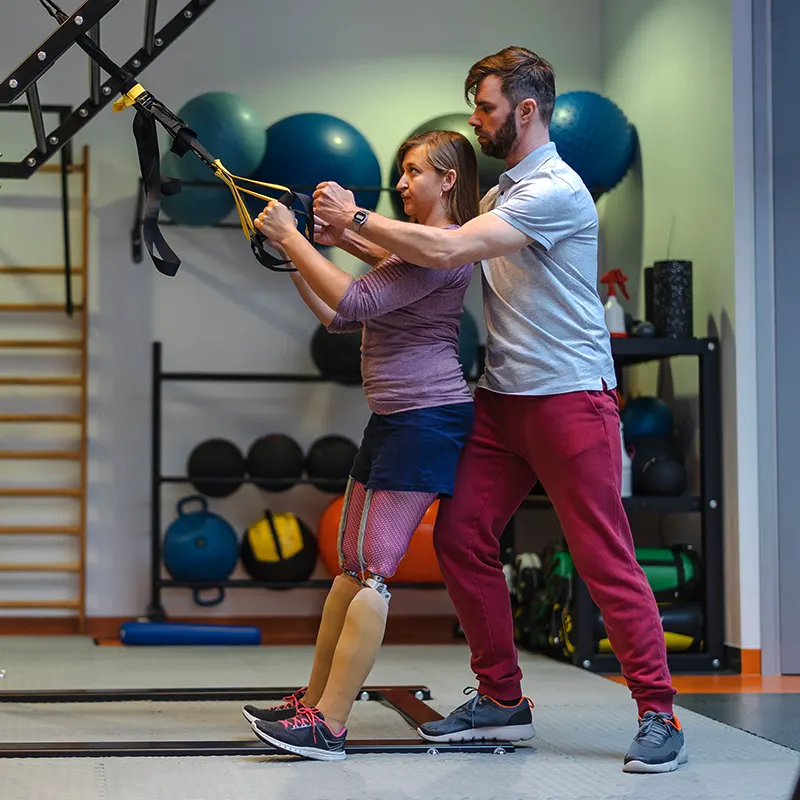
Help people increase community participation and movement through the provision of orthoses (splints and braces) and prostheses (artificial limbs) and associated clinical services to increase mobility and independence.
Podiatrists
Help people in the care of their lower limbs including the foot and ankle and may also be involved in supporting older people to reduce their risk of falling.
Psychologists
Experts in human behaviour who can help people change the way they think, feel, behave, and react. Psychologists can help people deal with childhood behavioural issues, learning difficulties, trauma, and loss. Treatment can help individuals, families, and groups.
Physiotherapists
Help with body and its movement to treat a broad range of health conditions including sports injuries and musculoskeletal conditions as well as chronic health conditions such as diabetes, obesity, osteoarthritis, and stroke.
Rehabilitation Counsellors
Facilitate social, educational, and economic inclusion for people experiencing illness, injury, disability, or disadvantage. They play a critical role in the assessment, case management, counselling, and service provision to achieve employment, volunteer, or study goals.
Social Workers
Support people to make change in their lives to improve their personal and social well-being by identifying issues, addressing change, and connecting people with support such as secure housing or family therapy.
Speech Pathologists
We work with people who have difficulties with speaking, listening, understanding language, reading, writing, social skills, stuttering and using voice. They work with people who have difficulty communicating because of developmental delays, stroke, brain injuries, learning disability, intellectual disability, cerebral palsy, dementia, and hearing loss, as well as people who experience difficulties swallowing food and drink safely.
group-based community
Group / Centre activities
At allied disability support services we have partnerships and networks with various activity centres in and around sydney area to assist participants with group-based community, social and recreational activities.
Our main objective behind organising these activities is to provide a healthy, happy, and safe environment for the NDIS participants where they can learn, enjoy, and socialise independently.
All the activities are mentored by trained and qualified professionals. Following are the group activities we are involved with but are not limited to: